
What is Trap-Neuter-Return (TNR)?
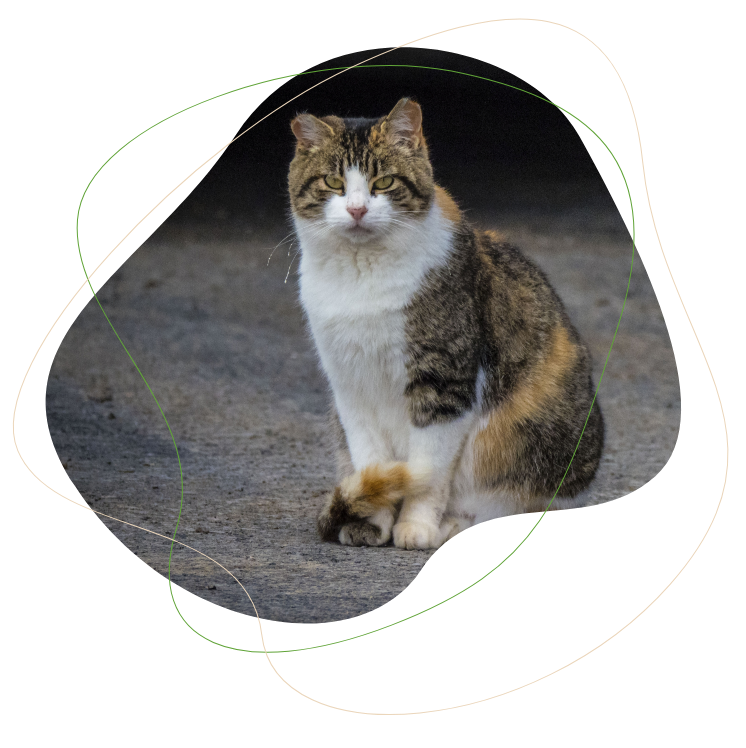
Trap-Neuter-Return provides a life-saving, effective solution for these beautiful, independent cats.
Many well-meaning people in our community are caring for animals without the means to have them spayed or neutered. This causes problems when the animals breed, fight, and cause other kinds of issues. Broken Promises SW is here to help because we want to make the world a better place for the animals and those who care for them.
We advocate for and practice Trap-Neuter-Return (TNR) for community cats. TNR is a humane and effective program through which outdoor cats are trapped, vaccinated, spayed or neutered, microchipped, ear tipped, and returned to their original location. Broken Promises SW does the trapping and transport, veterinarians perform the surgery, and the caregiver feeds and waters the cats daily according to best practices for colony maintenance. The resultant group of cats is known as a managed feral cat colony and the size of the colony decreases over time through natural attrition.
We do not charge any fees for our services, but each animal we neuter and vaccinate costs us $50.00, and often more if there are urgent medical issues needing to be addressed at the time of surgery.
“So how does this TNR thing work?” you ask.
Over the years we have learned a great deal from other trappers and TNR organizations large and small, and we have come up with a process that meets or exceeds the standards of the best programs we’ve followed. After honing our craft over a combined 60 years of trapping we’ve settled on a few things that we will always do in every circumstance: spay/neuter surgery, rabies, FVRCP vaccinations, ear tips, and microchips. That is the bare minimum we will do for every cat we trap, and in many cases, we will go further if medical care is needed at the time a cat is spayed/neutered. Any additional treatment, if necessary, is given under the guidance and recommendation of the amazing veterinarians we work with. They are the experts in animal medical care and their opinions matter.
About TNR
First off it is always beneficial to educate yourself! Some of the best info available comes from Alley Cat Allies – Please bookmark their site and keep it handy.
Please also download and use the Neighborhood Cats TNR Handbook as a reference. It can be found here.
- Preparation
- set up appointments
- Set up traps
- Afterwards
The first thing that you will need to do is determine how many cats are in the colony (a “colony” is a group of feral cats who live communally and share a food and shelter source). Take clear photos of each cat in the colony and keep a file for them. These photos are important because you want to attach the spay/neuter/vaccination certificates to the photos after each cat is neutered. This information will prove invaluable should the health department or animal control come poking around asking questions. If you can prove that the cats are neutered and vaccinated you may be able to prevent problems with local officials.
You’ll need a few traps to get started. The number of traps you need is determined by the number of spay/neuter appointments you can make at a single time. The Tru-Catch #30LTD traps are among the best in the business, and they are our first choice.
In the southern New Mexico area the only traps we trust are the Havahart traps sold by Home Depot.
The traps sold by tractor supply are lesser quality but will work in a pinch. Anything less expensive is of lesser quality and are not recommended as they may not reliably catch or hold a cat. The adage is true – “good traps are not cheap and cheap traps are not good.”
Then with the trap in front of you, familiarize yourself with the trigger mechanism. Set the trap and spring them with your fingers several times so you know how everything works. Practice setting the trap with a light pan pressure by adjusting the mechanism. You want to be able to set the pan so that a pressure of about 2-3 lbs. of pressure will trigger it, as this will prevent birds or other small animals from springing the trap.
Contact your local animal shelter, spay/neuter group or animal-friendly colleagues – they may be able to loan traps for your use.
After arranging for the traps you need to schedule appointments for the spay/neuter surgery. Do so through your local veterinarian or animal shelter.
Kittens as young as 8-weeks old or 2 lbs. in weight can be safely spayed/neutered. Though kittens can be done this young you will need to check with the veterinarian you’ll be working with to see if they will perform pediatric spay/neuter.
The next thing you need to do is to secure a place where you can bring the cats for recovery after surgery. Cans can be released 24 hours after surgery, but we encourage you to hold females for 48 hours. You want to keep them in a quiet area, in cages large enough to fit a cat, a litter box, and food and water dishes. The cage needs to be completely covered by a sheet so kitty will have a place to hide and feel secure. Never put a feral cat in a cage without covering it because they will squeeze through even the smallest openings. Make sure you keep only one cat in each cage so they will not fight with each other. The Tru-Catch #36D trap is large enough to use as a recovery cage in a pinch.
* Trapping. Two weeks prior to trapping you need to start putting the cats on a feeding schedule so you can get them to all come to eat at the same time. Leave food out for no more than 30 minutes and then pull away all uneaten food. This will not only train the cats to come and eat the same time of every day, but it will prevent other animals from wandering through and settling in. Three things attract cats to an area – food/water, shelter, and breeding opportunities. Any time one or more of those things are available cats will find them.
A week before the appointment for surgery you want to set out the traps and hold them open with bungee cords so that they do not close when the cats walk in them, but only if you are trapping in an area that is safe and secure and away from public view and interference. At feeding time(s) put the food *only* in the traps so the cats get used to walking in and out without fear. Keep the cats in one general area. If the area is not secure and you do not think that the traps will be safe from vandals do not leave them out; instead, put them out only when you intend to trap the cats.
Make sure that you skip the last feeding before trapping. This is an important step because you want the cats to be hungry and walk into the traps without hesitation. Skipping one meal will not harm them. Give water as usual.
When the time comes to trap the cats, put the bait behind the pan. Use the same cat food you’ve been feeding them – 99% of the time this will catch cats who have been trained to go into the traps. Remove the bungee cord and set the trap.
Step far enough away from the traps so that the cats will approach them without fear. Make sure you can see when a cat gets trapped so you will be able to get him quickly if needed. If the cats will not go near the traps when they can see you, try to go somewhere far enough away to be out of sight, but close enough to be able to hear if a cat gets trapped.
Once the cat is trapped, don’t be in a rush to immediately remove the trap from the area because you want to keep your movements into the cats’ territory at a minimum. When the trapped cat becomes frantic it is time to quickly cover the entire trap with a sheet to prevent the cat from trying to escape. A cat can badly injure herself if left in a trap uncovered. Take the trap with the cat away from the area immediately and continue to watch for other cats who may enter the remaining set traps. Repeat this process until you’ve either trapped all the cats or until you’ve run out of unoccupied traps. DO NOT EVER LEAVE A TRAP UNATTENDED for more than one minute at a time as a cat can badly injure herself in an uncovered trap.
Bring the trapped cats to the temporary holding space until it is time for the spay/neuter appointment, or straight to the vet if the appointment is scheduled for the same day. When you bring the cats for their spay/neuter, ask the vet to do the surgery, give rabies shots, FVRCP vaccines, microchip, and ear tip (not an ear notch).
At pickup time, the vet will give you back the cat in the trap and it is your job to transfer the cat to the recovery cage, or if you have used a #36D trap you need to care for them inside the trap while they recover. After 24-hours neutered male cats can be returned to the area where they were trapped. We suggest females be returned 48 hours post-surgery, but it’s common practice to release them after 24 hours.
When releasing a cat after surgery, return them to the exact spot where they were trapped. Do not “relocate” them to another area since doing so will put their lives in jeopardy. Do not bring them to another cat colony and think they will assimilate into the crowd. Cats can be fiercely territorial and protective of their home and serious fights will likely occur until the newly dumped cat is run off. The “R” in TNR is as important and the “TN.”